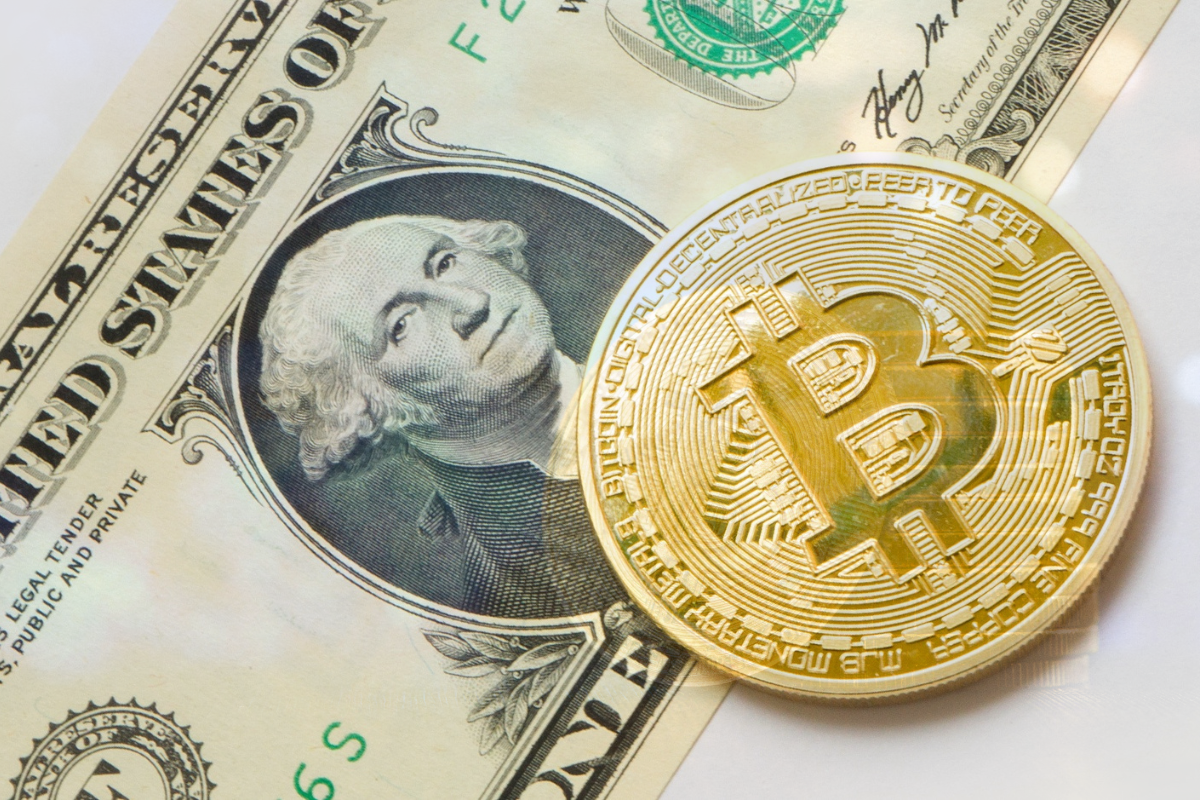


Can a Digital Coin be used in place of the Dollar?
Right now, a billion-dollar question is being asked at central banks, trading floors, and tech forums all around the world: Can Bitcoin become a global reserve currency? An idea that started as a seagulls-chasing-a-chip experiment in decentralised finance, Bitcoin and global cryptocurrencies is now being taken seriously as a basis for the world monetary system. With many world economies grappling with inflation and financial debt and struggling with new geopolitical alliances, the idea of a decentralized asset resistant to inflation, like Bitcoin, could easily hold great appeal.
What was once thought to be a speculative experiment, Bitcoin, is now gaining traction in policy debates and challenging the viability of state-issued fiat currencies and even gold. But can it be said to be a global reserve currency, which has long held on the pedestal of the almighty dollar?
This article helps understand Bitcoin’s possible and not-so-possible value in international finance. Using historical context, critical prerequisites, hurdles, and scenarios, we will examine how Bitcoin could potentially become more than just digital gold but the backbone of the world’s economy.
Role of a Global Reserve Currency: Historical Context
An internationally recognized medium of exchange for worldwide trade and finance is known as a global reserve currency. Central banks hold Global reserve currencies in large amounts for international transaction settlement between jurisdictions, stabilization of cross-border exchange rates, and store of value to support ongoing economic stability. Due in major part to the substantial economic advantage that the United States gained from the Bretton Woods Agreement, which was based on a $35 per ounce gold reserve, this function was initially held by the British pound and then by the US dollar following World War II.
As indicated by the IMF, the United States dollar remains dominant accounting for greater than 58% of foreign exchange reserves held in USD. The United States dollar largely possesses all of the attributes of a perfect currency, having significant economic, military, and political performance and having market depth, specifically US Treasury markets. A reserve currency must have liquidity, confidence, and acceptance; all currency attributes that Bitcoin must achieve if it is going to be in the luxury categories of money in the world.
Key Characteristics of Bitcoin
In starp contrast to traditional currencies, Bitcoin’s value proposition contains its core principles. Features consist of:
- Decentralization
Peer-to-peer networks underpin Bitcoin’s operations; no central authority has control over its issuance or transactions. This removes the centralized potential for manipulation and enhances its credentials as an asset that is resistant to censorship.
- Finite Supply
Bitcoin has a set limit of about 21 million coins. It is attractive as a long-term store of value because of its inherent deflationary nature. Unlike fiat currencies, Bitcoin cannot be ‘printed’ at will – even the issuance is algorithmically controlled, making it precious for long-term storage.
- Global Accessibility
Bitcoin can be sent and received anywhere across the world without banks or intermediaries. By removing barriers of the nation-state, the vision of a universal currency can be achieved.
- Blockchain Transparency
Because each transaction is documented on a public ledger, there is a high degree of transaction security and auditability.
These qualities make it appealing to a population looking for something other than inflation of fiat currencies and values that are affected by political fluctuations. Indeed, companies like MicroStrategy and nations like El Salvador hold Bitcoin on their books – an indication of its growing legitimacy.
Easy Steps for Bitcoin to Become a Reserve Currency
While with revolutionary characteristics, Bitcoin needs to address a number of important areas before it can aspire to the status of a global reserve currency. Below are the key areas where we need to improve:
Stabilizing Value and Reducing Volatility
Volatility is the single most important challenge Bitcoin faces, with price swings of 5–10% per day not unusual. This level of unpredictability is not conducive to reliable trade settlements via Bitcoin or for economic planning by institutions or central banks.
To reduce volatility, Bitcoin requires broader usage across markets and the financial system along with continued development of sophisticated hedging products including Bitcoin ETFs and futures, followed by broad usage in commerce to develop a consistent price stability over time.
Global Regulatory Clarity and Coordination
Currently, we have a patchwork of regulatory frameworks for Bitcoin. Some economies embrace it, some have outright bans, and many are somewhere in between – none of which inspire confidence for large-scale institutional adoption.
In order for Bitcoin to be a part of of the balance sheet of central banks, international coordinating bodies such as the International Monetary Fund (IMB), the Bank for International Settlements, and the G20, must relate to each other, and issue regulatory and accounting guidance on taxation, AML, and capital treatment in regard to Bitcoin. A coherent global framework would at least provide certainty and help endow Bitcoin with legitimacy as a reserve asset.
Integration with International Trade and Finance
For Bitcoin to serve as a reserve currency, it has to be embedded in the world-trade apparatus, meaning multinational companies, commodity exchanges, and governments need to start settling transactions in Bitcoin.
That is remarkably challenging, but not impossible. If a country that exports a lot of oil (e.g. Saudi Arabia or Russia) accepts Bitcoin to settle crude oil transactions, it could be a turning point for Bitcoin usage as a settlement currency in international trade.
Scalability and Transaction Efficiency
At present, the Bitcoin network settles around seven transactions per second, well below what is needed for global finance infrastructure. Visa settles more than 65,000 TPS.
The Lightning Network allows for off chain transactions, as a way to scale Bitcoin usage. Eventually, applications of Layer 2 and Layer 3 will allow for Bitcoin to scale up and complete high frequency global commerce, without materially losing decentralization or security.
Central Bank Engagement and Hybrid Models
An interim step could be central banks utilizing small proportions of Bitcoin for their reserves alongside USD, EUR, and/or gold. Countries that have some level of exposure to inflation, sanctions, or where monetary policy isn’t stable might benefit disproportionately from this arrangement.
Some central banks may even decide to test being a synthetic reserve currency that includes Bitcoin, stablecoins and/or sovereign currencies in an attempt to achieve monetary control with limited decentralization.
Integration into Monetary and Fiscal Policy
Bitcoin would need to be integrated into macroeconomic policy frameworks—which would be a huge change from the current traditional form. This might be done through Bitcoin as an interbank settlement, a collateral framework, or tax payments.
Some creative ways of developing fiscal models in a manner that respects Bitcoin’s decentralization whilst at the same time accepting concepts might undermine state authority, could be established and perhaps give rise to totally new economic frameworks.
Benefits of Bitcoin for Becoming a Global Reserve Currency
Hedge Against Inflation and Geopolitical Risk
Bitcoin’s stable supply protects against inflation and devaluation for currency. Its decentralized nature provides a neutral, sanction-resistant alternative for countries who want to avoid U.S. dollar reliance.
Financial Inclusion and Technological Innovation
If there are more than 1.4 billion unbanked people on the planet, then millions more are untouchable by the digital finance that digital currencies such as Bitcoin can offer. Bitcoin is accessible with only a smartphone, which can keep the poor connected to digital finance, which is still improving in terms of security, remittances, and financial tools for the neglected regions of the earth.
Diversification of Global Reserves
As bitcoin has no correlation with traditional assets, it can be useful in reserve portfolios for giving education upside when economies are in decline and better overall risk management.
Challenges of Bitcoin Becoming Global Reserve Currency
Extreme Volatility
Bitcoin’s price is incredibly volatile, making it doubtful that bitcoin can be trusted as a stable store of value. The unstable nature makes central banks and other entities reluctant to hold it as a reserve.
Regulatory and Political Resistance
Government agencies and financial institutions are either tentative in their approach to contributing to Bitcoin, or active opponents in becoming involved with Bitcoin. This hesitation is founded in illicit usage of stablecoins and Bitcoin, monetary sovereignty loss, and a lack of clarity or precedent in laws governing it.
Limited Supply and Liquidity Constraints
There are only 21 million coins available, which leaves Bitcoin’s utility at a limited scale when many countries want to adopt a reserve currency. If there are too large of holdings, the volatility would tend to require consideration of liquidity that would distort the market.
Integration and Infrastructure Challenges
The existing financial systems lack the infrastructure required to enable custody, settlement, and interference between fiat systems and Bitcoin systems to facilitate the adoption of Bitcoin by a country.
Environmental Concerns
The energy-intensive proof-of-work model to mine Bitcoin has raised subtle and forceful environmental criticisms, especially as climate change takes the stand in media and culture. Thus, Bitcoin cannot realistically be recognized for reserve currency status without “clean” alternatives.
Current Global Attitudes and Policy Developments
While El Salvador is leading the way through its adoption of Bitcoin as legal tender, large economies aren’t rushing into it. The U.S. has started to examine Bitcoin reserves with some legislative proposals, whereas other countries like China have banned its use entirely.
Countries like the UAE and Singapore sit in between, allowing Bitcoin operations in regulated ways without recognizing it as money or a currency. The IMF says you should be careful when adopting Bitcoin as legal tender.
The conversation is changing—Bitcoin, while still examined and debated, can no longer be dismissed as a speculative fad. It is being examined seriously amid continued global conversations about the future global financial system and its role.
Future Ahead: Bitcoin Reserve Currency
Complementary Reserve Asset
An example of a realistic near-term scenario could be Bitcoin co-existing as an adjunct to traditional reserve assets. Central banks and financial institutions may reserve a small allocation of their portfolio in Bitcoin as insurance for inflation/stagflation or geopolitical risk while not displacing reserve currencies.
Disruptive Shift in Times of Crisis
Severe political or economic crises—hyperinflation, currency collapse, or any noteworthy loss of confidence in fiat money—could result in a quickening of Bitcoin’s use as a reserve currency. In these cases, states may reach for Bitcoin due to its status as a store of value and a means of exchange.
Dominant Reserve Currency
The most transformative scenario is one where Bitcoin is able to overcome current hurdles to position itself as the prominent reserve currency. It may require massive adoption amongst other things, coordination of regulations, progress in technology, and integration into prevailing global financial assets. This is likely, but remains a long shot for the present and near future.
Conclusion
As Bitcoin draws closer to being a global reserve currency, it represents a potential shift towards transparency, decentralization, and digital finance. Despite areas of concern, such as volatility, regulation, and environmental impact, Bitcoin’s characteristics give it a good chance of succeeding. As a hedge, supplement, or future building block of the financial system, Bitcoin continues to change the global financial landscape. Bitcoin Reserve Tracker makes it easy for investors and individuals out there to keep a close eye on Bitcoin Reserve.