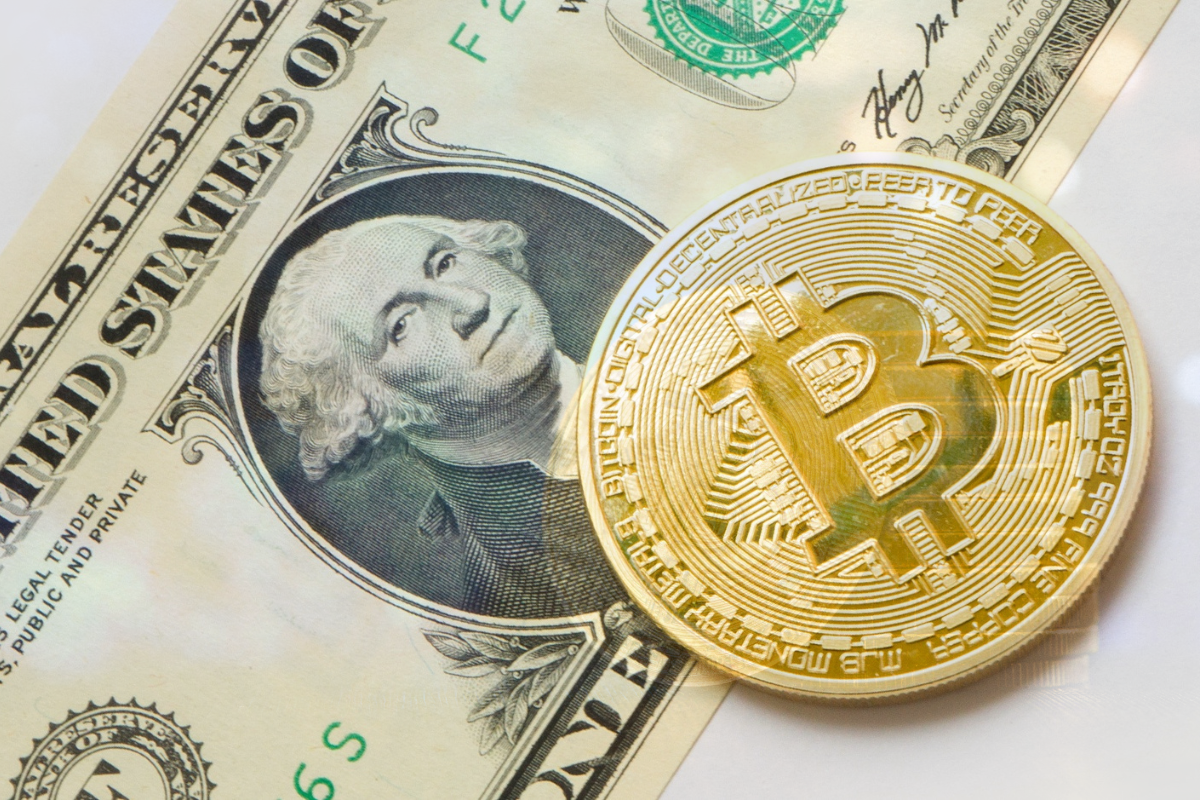


What do you get when you put the most volatile digital asset against the world’s largest economy? You get a policy proposal that could make history.
In what can only be described as an unexpected yet shrewd policy pivot, Donald J. Trump has championed the innovative idea of integrating Bitcoin into America’s national financial reserves. If allowed to proceed, this Strategic Bitcoin Reserve (SBR) would place Bitcoin at the same level as other asset classes: as an economic bulwark for the nation. Practically, then, it would be used as the ultimate economic straitjacket, formally tying the Trump agenda to a sense of economic independence, a drive to innovate in public finance, and growing dissatisfaction with the fiat form of currency.
From another point of view, a crypto asset reserve was at one time an impossibility; however, in the light of digitally inclined currencies being explored by select nations in lieu of conventional monetary systems, Trump’s plan seems to actually shift from a more conventional method of liquidation through auctioning into seizing and holding confiscated Bitcoin assets for themselves as sovereign reserves.
In this article, we will go into the nitty-gritty of the Strategic Bitcoin Reserve: how it will function, why it should be done, some criticisms, how it could affect us, and the possibility that the future life of the U.S. and world economic order might rest on it.
About Strategic Bitcoin Reserve (SBR)
The Strategic Bitcoin Reserve (SBR) is a policy proposal from Trump to include Bitcoin in the United States’ long-term asset management program. Rather than auctioning seized crypto from criminal activity, which has historically been done, the SBR would retain these assets as part of a federal treasury system.
Some key points:
- The SBR would operate without taxpayer dollars.
- It will focus on the long-term value potential of digital assets.
- The reserve may become a hedge against inflation and the trends of de-dollarization globally.
How Would It Work?
The structure of the SBR will build upon existing federal processes for managing seized digital properties.
The suggested dynamics are:
- The IRS, DOJ, and FBI agencies seize crypto assets in investigations.
- Rather than being re-sold at auction, these assets are transferred to a national reserve authority, which could be the Federal Reserve (Fed) or a crypto treasury office created strictly for managing these properties. Digital assets will be held securely, insured, and protected with the stipulation that the reserve will be independently audited on an annual basis.
- Reserved Bitcoin would not be usable on a daily basis. Rather, if held/invested to be a reserve for emergencies, economic shocks, or financial crises like a strategic oil reserve.
Trump’s Motivation Behind the Bitcoin Reserve Plan
Trump promotes a Bitcoin reserve based on his thinking about finance and his messaging as a politician. Knowing his thinking informs you on how this policy resonates with his base and political economic strategists.
Anti-Fiat Sentiment
Trump has often criticized the Federal Reserve’s expansionary monetary policies, particularly while inflation was present. However, Bitcoin offers a fixed supply with decentralized governance, aligning Trump’s belief in finite (hard-backed) value systems with value systems that rely on fiat currency models.
Alignment with “America First” Agenda
Incorporating Bitcoin underscores important aspects of Trump’s nationalist economic philosophy:
- Improve domestic financial sovereignty.
- Reduce exposure to foreign-controlled monetary policy.
- Support government “tech-savvy” visionary fiscal planning
Political Strategy
This policy also resonates well with the newer voter blocs emerging in the United States:
- Young techies interested in non-centralized solutions
- The “libertarian wing” of their party
- Entrepreneurs who want the ability for less government interference in finance
By endorsing and supporting Bitcoin, Trump can tap into an expanding voter base that perceives digital currency solutions as the future of money.
Fiscal and Economic Implications
Although bold, the proposition of holding Bitcoin at a sovereign level has significant economic implications for both domestic and global value networks.
Strengthening National Reserves
Bitcoin presents a new opportunity to the U.S. in terms of enhancing and diversifying its reserve profile in a productive manner:
- Mitigated over-dependence on gold and government bonds
- Introduces a hedge asset that may respond differently to a downturn in the economic cycle
- Shows the rest of the world that it is taking the lead in adopting the digital economy.
Potential Risk to Fiat Credibility
However, there are significant implications of embedding Bitcoin in federal reserves:
- It could undermine confidence in the dollar as the trusted, stable global currency.
- Could demonstrate the decline of trust in the current financial system.
- Increased exposure to volatile assets only used in central banks would be added.
Global Repercussions: How Other Nations Might React
If the U.S. is to reserve Bitcoin, then it could have cascading consequences for financial institutions around the world.
Competitive Emulation
Countries that are putting effort into digital currency strategies could follow suit:
- El Salvador could be validated as the first country to declare Bitcoin as legal tender.
- Russia and China could double down on their CBDCs or consider exploring their crypto reserve to one-up the competition.
- Emerging economies could think of a similar tactic to hedge themselves against currency destabilization.
Impact on U.S. Global Standing
Trump’s proposal may:
- Improve America’s image as a tech economy.
- Encourage global regulatory frameworks for the integration of digital assets.
- Increase tension with global banking authorities like the IMF – which is against the acceptance of crypto at the state level.
Public and Political Reactions
Like most Trump-era initiatives, the Strategic Bitcoin Reserve has incited adulation.
Supporters Say:
- It should preserve long-term wealth.
- It puts the United States in a position to acknowledge cryptocurrency as a valid asset at last.
- It protects taxpayers against unpredictable events on a global scale.
Critics Say:
- Trump’s simply doing this for campaign optics.
- Bitcoin is too volatile and does not belong in a national reserve.
- It could destroy existing financial regimes.
There might be push-back from central banks, mainstream institutional economists, and Democratic politicians who have concerns about the introduction of risk into national fiscal policy.
Legal and Regulatory Framework
Taking care of federal cryptocurrency assets will open up new legal avenues. If the SBR is introduced, altogether a new legal framework will need to be established.
Required Changes
- A new law—tentatively named the Digital Asset Reserve Act (DARA)—would need to be established at least to define guidelines, storage, and oversight.
- The SEC, IRS, and CFTC would have to come to some arrangement in terms of custody, taxation, and disclosure as it relates to digital assets.
- There may be an applicable requirement for independent third-party audits for transparency and security.
Conflict with Existing Laws
Experts have noted that there will likely be various legal conflicts arising, including:
- Holding bitcoin may violate the Federal Reserve Act as it does not currently permit reserve assets that are crypto.
- Seizure and holding may require amending existing civil and criminal forfeiture laws.
- Both the leadership from the Treasury and the Fed will require alignment of both ideology and procedures—easier said than done.
Trump’s History and Relationship with Bitcoin
Understanding the changes in Trump’s viewpoint on cryptocurrency helps explain both the authenticity—and political acumen—of the idea of the SBR.
Early Opposition
“I am not a fan of Bitcoin & other Cryptocurrencies, which are not money…” was one of Trump’s well-known tweets from 2019.
He claimed that the digital currency was being used to facilitate criminal activity and would threaten U.S. dollar dominance in the global financial system.
Recent Support
By 2024, Trump would have moved notably to the other side of the issue:
- Released Trump NFT collections, bringing him tens of millions
- Begun accepting crypto-based donations for political campaigns
- Referred to potential domestic Bitcoin mining jobs, stating that “America must be energy independent on the blockchain” and positioning the U.S. blockchain economy as an innovative leader
This position could be both political opportunism and an acknowledgment of financial trends in flux.
Trump Strategic Bitcoin Reserve: Potential Future Scenarios
The future of the Strategic Bitcoin Reserve initiative depends upon broader political, economic and regulatory variables.
Scenario 1: Full Institutional Integration
Ten years from now, the U.S. Government could:
- Allocate 1–2% of its reserves to Bitcoin.
- Establish custodial systems and auditing protocols compliant with the Federal Reserve or Treasury.
- Encourage peer government members from the G7 to consider similar moves resulting in a reserve bloc policy shift to digital.
Scenario 2: Political Reversal
A future Democratic administration might:
- Dismantle the SBR program completely.
- Continuing to auction off seized cryptocurrencies
- Place additional restrictions on government-held digital asset purchases, inhibiting innovation.
This highlights how tenuous crypto policy is in a polarized political environment.
Conclusion
Donald Trump’s Strategic Bitcoin Reserve radically reconsiders how the U.S. government interacts with its digital assets. Whether understood as an innovative hedge or an opportunistic political maneuver, the SBR is part of a rapidly growing narrative, as crypto shifts from ‘niche’ to ‘core.’
This proposal raises important national security, monetary stability, and financial sovereignty issues. Ultimately, success—or failure—will depend on agency cooperation, the evolution of the market, and changes in the global economy. What is clear is that Trump’s addition of cryptocurrency to the national narrative guarantees that America’s financial future will ultimately be inscribed on the blockchain.
If you want to examine Bitcoin reserves globally, Bitcoin Reserve Tracker provides accurate data on Bitcoin reserves.