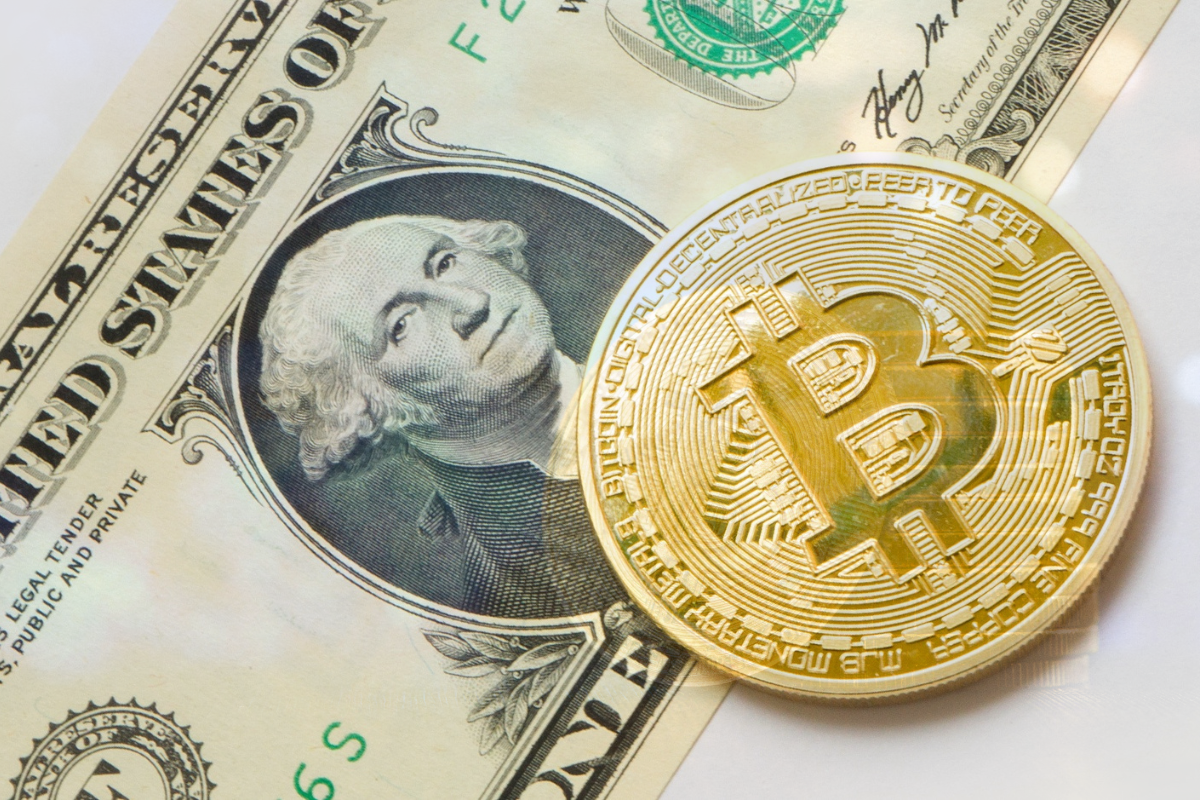


When the state begins hoarding Bitcoin, it is time to question who is actually in control of the future of money”. As the US began to set up a Bitcoin reserve, BitMEX co-founder Arthur Hayes highlighted this important point in a recent interview.
Despite rising interest in the States from institutions as well as a renewed Trump-led pro-crypto agenda, it is interesting that Bitcoin, in the short term, is flirting with $100,000 in 2025, and Hayes simply does not yet trust Washington’s abrupt shift forward in their Bitcoin statements.
In a half-hour conversation with crypto influencer Kyle Chasse, Hayes is extremely critical in his analysis of the US’s recently announced Bitcoin reserve plan, raising strong doubts that it will be a long-term opportunity.
Despite Bitcoin’s recent lift-off from a stagnant 2023, Hayes believes that even if Bitcoin’s momentum is improved from a laid-back January start, this strategic reserve could ultimately be much worse for the crypto ecosystem and economy than good.
What Is the US Bitcoin Reserve Plan?
The US Bitcoin Reserve Plan, announced in early 2025, is meant to treat Bitcoin like gold: a strategic asset that the federal government holds. Like the gold reserves stored in Fort Knox, the plan is meant to establish a national crypto reserve that can act as a hedge against inflation or other instability in the global financial markets.
Here’s a breakdown of how the plan is proposed to work:
- Source of Bitcoin
The US government already has a large supply of Bitcoin from civil forfeiture; Bitcoin that was obtained from criminal enterprises such as those on the Silk Road and Bitifinex hacks. The total Bitcoins add up to almost 200,000 BTC, worth over $18 billion at current prices.
- Reserve Policy
The government typically sells confiscated crypto assets through public auction when civil forfeiture is complete. The government has now decided to keep the previously forfeited holdings. There has also been talk of expanding the reserve by purchasing Bitcoin with taxpayer money or other budget-neutral alternatives.
- Purpose
Proponents claim the reserve could positively impact the US financial system, protect against future inflation, and allow the country to continue to maintain global financial leadership as global assets become digital assets.
Arthur Hayes Criticizes US Bitcoin Reserve Announcement
Arthur Hayes had strong words in response to the US Bitcoin Reserve announcement. In a post on X (formerly Twitter), he stated that the news was simply political theatre and that the President’s announcement lacked real substance, with no explanation of how the plan could be funded or implemented without a Congressional vote.
“What was announced was nothing new,” Hayes continued. They still need Congress to approve borrowing money or revaluation of the gold price. Without that they can’t afford to buy Bitcoin or even pretend to have a crypto reserve.” Hayes also implied that this was more of a political signaling announcement than anything else.
This reserve was officially established with Trump’s January 23 executive order called “Strengthening American Leadership in Digital Financial Technology.” TOne of the required actions was the establishment of a presidential working committee on digital assets to investigate the potential for a national cryptocurrency reserve. However, Hayes is starting from the point of scepticism and without a real financial action plan and genuine process due diligence.
Top Reasons Arthur Hayes Criticizes the US Bitcoin Reserve Plan
Hayes’s issues with the US Bitcoin reserve aren’t solely grounded in his cryptocurrency maximalism or anti-government views; they address the contradictions between Bitcoin’s foundational elements and political control.
Political Risks and Market Instability
One of Hayes’s most significant issues is the dangers of political risk. He believes that keeping Bitcoin reserves allows the US government to manipulate them. For example, there are no limits on what a future administration could do with Bitcoin, it could sell off Bitcoin reserves to maintain their deficit or to finance a new program during a crisis.
In any case, there would be a risk of significant volatility because investors never know when a government would flood the market with BTC and create a crash out of nowhere. In his own words, “What you can buy can be sold.”
This degree of volatility risks confidence in Bitcoin’s stability as a store of value, which ironically is what this reserve is intended to guarantee.
Fiscal Concerns and Public Perception
Hayes also assesses the plan’s economic justification. At a time of record-high national debt and swelling deficits, it might feel irresponsible for financial conservatives and the general public to see billions dedicated to buying Bitcoin.
In addition, the public relations issues surrounding Bitcoin as a speculative, volatile asset do not help matters. Though the growth of institutional interest in Bitcoin is encouraging, the average voter still views Bitcoin as a risk-laden scam at best and reminds him of wannabe crypto “bros” who live in their mother’s basement. Hayes argues that elected officials are very unlikely to burn political capital in such a controversial asset class, particularly in a recession where the public has heightened scrutiny of government decisions.
Contradiction with Bitcoin’s Decentralized Philosophy
Perhaps Hayes’s most compelling argument is philosophical. Unrestricted by the government or other organizations, Bitcoin was created to provide an alternative to centralized banking systems. If the US government were to hoard large amounts of Bitcoin, it would be antithetical to the very spirit of Bitcoin.
As a central economic actor through accumulation of Bitcoin, the US government could gain undue influence over the Bitcoin network. Not necessarily through protocol development, but via market manipulation and policymaking. This could hinder innovation and lead to developers and entrepreneurs running from such an unencumbered world, where they feel the tentacles of state control looming over them.
Hayes cautioned that the reserve could potentially result in increased surveillance, stricter regulations, and ultimately, more centralization—everything that Bitcoin was originally created to counter.
Lack of Active Engagement from the Government
In addition to simply holding Bitcoin, Hayes doubts that the US government will provide meaningful support to the crypto ecosystem. For any reserve to be successful, it would require a unit of active engagement—running nodes, supporting protocol development, and engaging with the crypto community as a whole.
Hayes sees little evidence that the US government has the resources, effort and expertise to take on this level and type of engagement. Without that, the Bitcoin reserve stands to be a passive, politically controlled asset—only valuable for its political optics, not its functionality.
How did the Crypto Community Respond to Hayes’s Criticism?
As you would imagine, Hayes’ comments have sparked a whirlwind of interest in the crypto scene. There is clearly a split in the community about the value of the US Bitcoin reserve.
- Legitimacy
Some argued that a state-backed reserve would validate Bitcoin even more and allow pressure for widespread institutional and public adoption. An announcement from the US government, they believe, communicated a strong market signal.
- National Security
Others see a geopolitical use case for Bitcoin. As the world becomes more digitally dependent whilst also increasingly filled with political division, Bitcoin could be seen as a hedge or counter to foreign issued digital currencies.
- Agree with Hayes
A good portion of the community supports Hayes’ concern over the US government’s stance on holding Bitcoin. Many share his opinion that there is potential for political manipulation, market inefficiencies, and that it is dangerous to convert a decentralized asset into a US government tool.
- Distrust of Government
The cryptocurrency ethos has, since the inception of Bitcoin, been doubtful of the proper functioning of centralized authority. For those users, the concept of a national reserve like they are suggesting violates the principles of financial freedom, privacy and decentralization on which cryptocurrency was founded.
Arthur Hayes: 2 Long-Term Perspective on Bitcoin
Although Hayes opposes the US reserve proposal, he remains optimistic about Bitcoin’s future and considers it a crucial tool in reshaping global finance.
- Price Outlook
Hayes has forecasted $1 million for Bitcoin by the end of 2028. The reasoning for his projection is the increasing global debt burden, and the growing attractiveness of non-sovereign assets. When fiat begins to lose value, assets like Bitcoin could be the new safe havens.
- Protection Against Fiat Decline
Hayes believes that Bitcoin will serve as a hedge against fiat currency’s reduction in credibility and stability. Even if the government fails to properly manage it’s Bitcoin strategy, private users and sovereign individuals will still use BTC as a hedge against our financial systems.
Conclusion
Arthur Hayes’s takedown of the US Bitcoin reserve initiative works on two levels: a reality check and a philosophical rallying cry. Hayes warns that blending government bureaucracy with a decentralized, open-source monetary system could lead to unintended consequences, potentially transforming a promising asset into a political tool for control.
While some may argue that any government involvement in any aspect of Bitcoin would increase legitimacy and national interest, Hayes warns us to take note. His observations remind us that Bitcoin’s value lies in its optionality, independence from politics, independence from inflation, and independence from centralized governance.
As the US continues its mission to explore the future of digital finance, we will have to wait to see if this reserve turns out to be a legitimate strategic asset or just another government attempt to control the financial landscape of crypto.
Is monitoring the accurate Bitcoin Reserve becoming a bigger problem for you? Not anymore, with Bitcoin Reserve Tracker. This is the best tracker that streamlines Bitcoin reserve tracking.